CEO Insults A Black Waitress In Japanese — Seconds Later, Her Flawless Reply Embarrasses Him
CEO Insults A Black Waitress In Japanese — Seconds Later, Her Flawless Reply Embarrasses Him 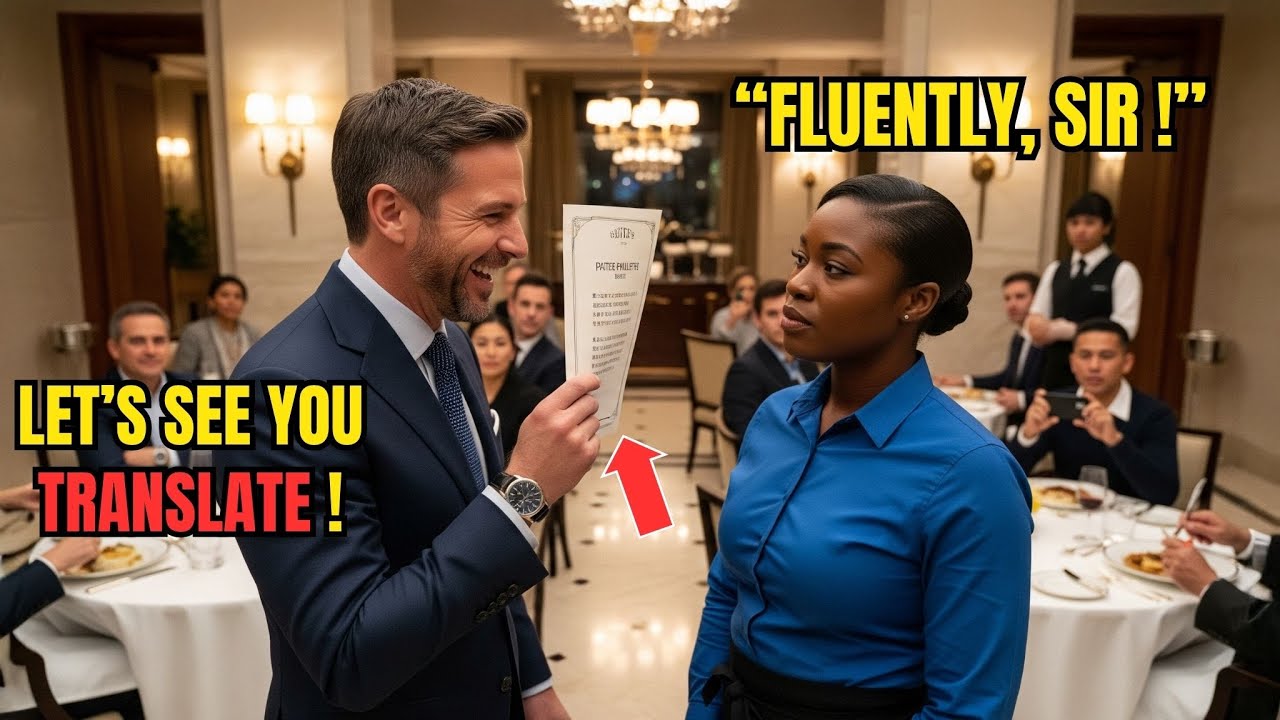
“Big chest, small brain. That’s all these black waitresses are good for.” Preston Anderson said it in Japanese, rapid, confident, cruel, while staring at Iris Sullivan’s body. He assumed she couldn’t understand. His execs squirmed, eyes on their plates, but Anderson kept going, switching between English and Japanese like he owned the room.
“Honey, you understand me?” Mocking, slow, like talking to a child. Then back to Japanese. “Of course she doesn’t. Look at her. Nice body, empty head. That’s why they hire these black girls, right? Something pretty to look at.” He grabbed her order pad and flung it across Elite Tower restaurant’s floor. “On your knees. Pick it up.
” Iris Sullivan slowly knelt down, gathering scattered pages. Then she stood tall, locked eyes with the billionaire, and dropped five words in flawless Japanese that turned his smirk to stone. His $3 billion empire, done. Think she backs down? Think again. 4:00 a.m. Iris Sullivan hustles into Elite Tower restaurant.
Napkins folded like origami. Financial Times devoured over black coffee while most of Manhattan sleeps. She moves like a pro who’s nailed it a thousand shifts but still gives a damn. Straightens silverware, adjusts wine glasses to catch morning light perfectly, checks every detail. Manager Gregory Wilson barely nods as he passes.
“Morning, Iris.” Never really looks at her. Never asks questions. To him, she’s just another reliable server. Shows up on time, doesn’t cause problems, fades into the background. If he knew about her Tokyo University master’s degree in international relations but he doesn’t ask. Nobody does. Eight months ago, Iris had a different future, career, title, respect.
She’d finished her master’s in international relations from one of the most prestigious programs in the world, written her thesis on cross-cultural business ethics in three languages, landed interviews at McKinsey, Deloitte, Boston Consulting Group, then visa hell hit. Paperwork delayed, work authorization expired.
The consulting firms couldn’t wait. Offers evaporated. And suddenly, the woman who’d been fluent in five languages and ready to advise Fortune 500 companies was scrambling to pay rent. Her mother, back in Detroit, stage three breast cancer. Treatments cost $4,000 monthly. Insurance dropped her. Hospital threatening to stop treatment without payment. Iris needed income, fast.
Cash-paid restaurant work was the only option without proper documentation. It was supposed to be temporary. That was eight months ago. Now she’s here, serving water to people who won’t make eye contact, bringing food to billionaires who talk through her like she’s furniture. Smiling through disrespect because pride doesn’t pay for chemotherapy.
By 7:00 a.m., Manhattan’s power players filter in. Senator Williams, table six, black coffee. Katherine Moore, venture capitalist, table nine, egg-white omelet and business calls. Daniel Harrison, old money, treats servers like they’re part of the decor. Elite Tower isn’t just any restaurant.
It’s the restaurant where $50 million deals close over lunch, where careers launch or die between appetizers and dessert, where privacy costs money and Elite Tower delivers. The tables are spaced far enough that conversations stay private. Staff trained to be invisible, present enough to refill drinks, absent enough to be forgotten.
And Iris? She’s the ghost who brings them their world. She’s served them all, tech founders, politicians, billionaires who snap their fingers like calling a dog. Senator Williams once held a speakerphone conversation about immigration policy. “Those people who don’t belong here.” While Iris stood 3 feet away holding a notepad. An immigrant herself. Invisible.
Katherine Moore snaps her fingers when she needs something, literally snaps. And if Iris doesn’t move fast enough? Threatens bad reviews, makes it clear servers are replaceable. Iris swallows her pride every shift, accepts this as reality, at least until her visa resolves. But around 10:00 a.m.
, a businessman leaves a Japanese business card on his table. Iris picks it up, and for just a moment, her mask slips. Her eyes flicker with recognition. She reads the Osaka Trading Company details, then pockets it after wiping down. During break, she sits in the staff room with her phone, opens a language learning app. But the screen shows review level native speaker, advanced Japanese grammar, cultural idioms, business terminology.
This isn’t someone learning. This is someone maintaining fluency. Emily Brooks glances over. “What’s that?” Iris quickly closes it. “Just studying. Keeps my mind sharp.” Emily shrugs. Doesn’t push. Nobody does. The staff knows Iris is friendly but private. Shows up, does her job, goes home, no drama.
No one knows who she really is. But today’s VIP, Preston Anderson, CEO of Apex Innovations, the kind who snaps fingers like you’re a dog, the kind who thinks speaking Japanese makes him untouchable. Little did he know his secret language was her weapon. As Iris returns to the dining floor, she passes a framed photo, Elite Tower’s owner shaking hands with Tokyo University’s chancellor.
Business exchange program. Iris had been in that program. Walked those halls, sat in those classrooms. Now she’s serving water to people who’ve never bothered asking her name. But that’s about to change. 11:30 a.m. The front doors swing open with unnecessary force. Preston Anderson doesn’t walk in, he invades.
6’2″ Tom Ford suit, Rolex catching light. Behind him, seven executives scramble to keep up. “Reservation for Anderson.” Not a question. The hostess checks her computer. “I’m sorry, Mr. Anderson.” “Find a table or your boss hears about it. Apex Innovations, $3 billion. I’m worth more than your yearly revenue.” He leans over the podium, intimidating.
“So unless you want problems, I suggest you make it happen.” Within 3 minutes, he’s got the best table, center room where everyone can see him. He drops into his chair like he owns it, arms spread. “Water, room temperature, and I’ll handle the wine. I spent 2 years in Tokyo, so I actually know what I’m doing.
” Loud enough for nearby tables, a flex. Gregory Wilson appears. “Your server today will be” He scans the room. Most servers are slammed. His eyes land on Iris. “Iris.” Wilson’s voice has that sharp edge. She walks over, professional. “Yes, sir?” “Emily called in sick. You’ve got VIP section, Mr. Anderson’s party.” Iris glances at the center table, eight men in suits, one sitting like he’s posing for cameras.
“Understood.” Wilson lowers his voice. “He’s important. Apex Innovations, huge tech company. Don’t screw this up.” “I won’t.” She grabs her notepad and approaches table 6/7. “Good afternoon, gentlemen. My name is Iris and I’ll be” Anderson doesn’t look up. Keeps talking to his COO like she doesn’t exist. Iris waits.
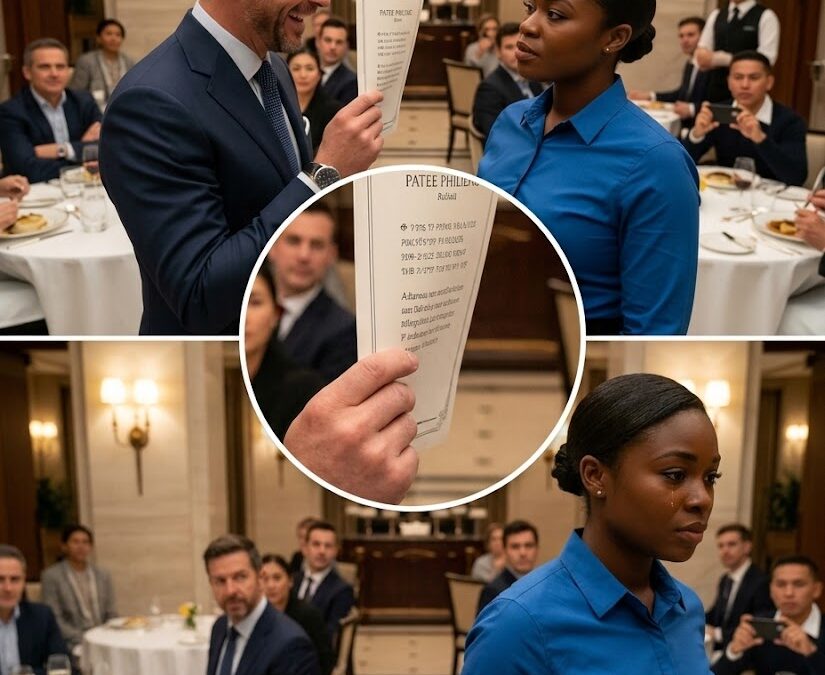
After 10 seconds “Sir?” “Whenever you’re ready.” Anderson finally looks. Not at her face, at her name tag, then through her, like looking past a window. He turns to Charles and says something in Japanese, fast, casual. Iris’s pen pauses for half a second. Anderson switches back to English. “Yeah, tasting menu. Whatever your chef recommends.
” “And for drinks, I’ll handle the wine list.” He looks at her, dismissive, brief. “You can go now. Not thank you, just go.” Iris nods and walks away. Behind her, Anderson switches to Japanese, another comment. His executives laugh, uncomfortable, forced. Iris returns with water on a silver tray. Places each glass with precision.
Anderson is discussing quarterly projections in English when Iris reaches his glass. The moment she sets it down, he switches to Japanese, speaking rapidly to Charles. “Typical, right? Nice to look at but empty-headed.” He said it in Japanese, assumed she couldn’t understand. Charles shifts uncomfortably. “Preston” But Anderson keeps going, still Japanese, gesturing vaguely toward Iris.
“Girls like her, black girls, probably high school dropouts. Can she even handle a complicated order?” The executives exchange glances. One looks away. Iris continues placing glasses, face perfectly neutral, professional, no reaction. Because Preston Anderson believes Japanese is his secret language, his private channel for saying things he’d never say in English.
2 years in Tokyo, now he uses it like a superpower, insulting people to their faces without consequences. Charles tries redirecting in English. “About the merger” Anderson rolls on, still Japanese. “Look how she holds that pad, like she’s never seen one. This is what no education looks like.” Iris finishes the last glass, stands at the table’s head.
“Anything else I can get you?” Steady voice, warm, professional perfection. Anderson waves her away. “No, we’re good.” She nods and walks away. Behind her, Anderson laughs, says something else in Japanese, another insult she supposedly can’t understand. But Jonathan Mitchell, a younger VP who worked in Japan, isn’t laughing.
He understood every word. The look on his face says he’s already regretting this lunch. Iris returns to the service station, places her tray down, hands steady. Another server passes. “You okay?” “I’m fine.” Iris smiles. “Just another VIP.” But her jaw is clenched tighter. Iris bites her tongue. Not today.
Preston Anderson just made mistake hash one. He picked the wrong empty head. 20 minutes into service, Preston Anderson is getting bolder. The appetizers arrive. Iris delivers each plate with practiced grace. Anderson barely acknowledges her. But, the moment she steps away, he switches to Japanese. Did you see that? She probably can’t even do basic math.
Bet she can’t add up the bill without a calculator, huh? He laughs. Hope she doesn’t handle the check. Jonathan Mitchell stares at his plate, jaw tight. When she brings bread, Anderson gets crude, in Japanese. Look at that body. That’s all they hire these black girls for. Nice to look at while we talk business.
Certainly not for their brains. Charles Davis looks uncomfortable, but says nothing. By the time ribeye and sea bass arrive, Anderson has switched entirely to Japanese for his commentary. I bet she doesn’t even know what dry-aged means. These servers, they just memorize scripts. No actual knowledge, no education, just bodies and smiles.
Iris finishes placing plates. Can I get you anything else? No. Anderson doesn’t look at her. She walks away. Behind her, Anderson says something that makes even Charles wince. Something about her body. Something that crosses every line. Jonathan Mitchell sets down his fork. He’s lost his appetite.
But, if Iris hears, and she does, she shows nothing. She moves through the dining room fluidly, controlled, every gesture precise. She anticipates needs, refills Charles’ water before he asks, adjusts Steven Taylor silverware because she notices he’s left-handed, catches a wrong order before it leaves the kitchen.
This is what 8 months of survival looks like. Perfection through necessity. Gregory Wilson watches and nods approvingly. This is why he keeps Iris. No problems, no drama, no waves. But, if Wilson looked closer, he’d notice the cracks. The way Iris’ hand lingers when setting down Anderson’s plate. The extra care straightening his silverware.
How she excuses herself to the service station more frequently. In those brief moments alone, Iris pauses, closes her eyes, breathes deeply, hands pressed against cool marble. Then, she opens her eyes, smooths her apron, fixes her face, professional mask back in place. Because this isn’t about pride, it’s about survival.
Her mother’s cancer treatments cost 4,000 monthly. Insurance lapsed, medical bills stacking up. And Iris, despite her master’s degree, despite five languages, despite her thesis on ethics, is making minimum wage plus tips. She needs this job. Every shift, every tip, every smile forced through gritted teeth. Rent due in 8 days. Mother’s next treatment in 12.
Pride is a luxury she can’t afford. Swallow it. Mom’s chemo waits for no pride. So, when Preston Anderson makes another Japanese comment about her education, her intelligence, her worth, Iris does what she’s been doing for 8 months. Swallows it, buries it, keeps moving. But, something is building inside her. 8 months of swallowing insults has compressed into a dense, burning core.
And Preston Anderson keeps adding fuel. Other diners are noticing. The woman in her late 50s, impeccably dressed, diamond earrings, she’s been trying to enjoy her salmon. But, Anderson’s volume keeps pulling her attention. She doesn’t speak Japanese, but she recognizes the tone, the dismissive gestures, the way Anderson’s eyes follow the black waitress with contempt.
Margaret has built her career in venture capital by reading people. What she reads from Preston Anderson disgusts her. She watches Iris move professionally, then watches Anderson say something that makes his entire table uncomfortable. Margaret sets down her fork, makes a mental note.
She’d been considering a $20 million investment in Apex Innovations. Not anymore. Jonathan keeps glancing toward his boss with increasing discomfort. He worked in Tokyo 3 years, understands every word, and he’s mortified. This is career-ending behavior. If anyone records this, if anyone else understands Japanese. Jonathan pulls out his phone, pretends to check emails, but he’s texting his wife. Need to find a new job.
Can’t work for this guy. A younger man, maybe 30, sitting alone with his laptop. He’d been working through lunch, mostly ignoring the room. Until he heard Japanese. His head comes up. He speaks Japanese, too. Lived in Osaka 5 years with his Japanese wife. What he’s hearing makes his blood boil. He watches Iris serve with quiet dignity.
Watches her face remain neutral while Anderson mocks her. The man reaches into his pocket, pulls out his phone. Very carefully, very discreetly, starts recording. Because some things need documentation. The room’s a tinderbox. Iris, she’s the spark. Dessert service. Iris approaches carrying chocolate soufflés.
Delicate, expensive, perfectly timed. She sets them down. Valrhona chocolate soufflé with raspberry coulis. Preston Anderson frowns, pokes it with his fork. This isn’t what I ordered. Sir, this is part of the tasting menu. I don’t care. I wanted crème brûlée. Charles leans over. Preston, you said the tasting menu was I changed my mind. Anderson pushes the plate away.
Tell your chef to fix it. Of course, sir. But, Anderson has turned to his executives, switching to Japanese. This is exactly what I’m talking about. People like her, they can’t handle simple instructions. You give them a job requiring thinking, they mess it up. Jonathan shifts. Preston, but Anderson is rolling. Still Japanese.
Look at her. Probably doesn’t even understand why I’m upset. Black waitress with zero education. What did we expect? He turns to Iris, switching to English, speaking slowly. Honey, you understand? Crème brûlée, not chocolate. Can you remember that? Mocking, cruel. Iris pulls out her notepad. Yes, sir. Anderson snatches it from her hands, like taking a toy from a child.
Then, he taps the notepad against her forehead three times, deliberately. Tap, tap, tap. Maybe this will help you remember. He hands it back and switches to Japanese. Pointless to explain to someone who can only do this level of work. She has no education. These black girls, they’re hired for their looks, not their brains.
You can’t expect intelligence from people who weren’t raised with any. The table goes silent. Charles looks away. Jonathan’s face is red. William stares at his plate, and Iris stands there, notepad in hand, and forehead still warm. Her face remains neutral, but something inside her snaps. 8 months of swallowing insults, 8 months of burying rage, 8 months of being invisible. It’s over.
Iris sets down her notepad with deliberate calm. She looks Preston Anderson directly in the eyes and speaks. In Japanese. Perfect Japanese. Kyoto dialect, the most refined, elegant dialect in the language. The kind that takes years to master. I must apologize, Mr. Anderson. She pauses, a beat. Let the shock register.
So, when I was studying international relations at Tokyo University, they didn’t teach us how to serve customers like yourself. The words detonate like a bomb. Preston Anderson’s face goes from confident to confused to pale. I spent 2 years in Kyoto completing my master’s degree. My thesis was on cross-cultural business ethics, published in the Journal of International Relations.
I’m fluent in five languages. Japanese is my second best. Pause. So, when you said just now, in Japanese, that black girls are hired for looks, not brains, that we have no education, that I probably never finished high school, another pause. I understood every single word. Anderson’s mouth opens. No sound. Every insult, every comment about my body, every assumption about my intelligence.
For the past hour, you’ve been speaking Japanese because you thought it made you untouchable. Iris picks up her notepad. You were wrong. She switches to even more formal Japanese, academic, corporate level. In Japan, there’s a concept called hazukashii, that Japanese shame you can’t wash off. Profound shame from being exposed as dishonorable.
You should familiarize yourself with it. Because what you’ve done here today, in front of witnesses, that’s exactly what you should be feeling. The restaurant goes silent. Diners stop eating. Servers freeze. Even kitchen noise quiets. Everyone understands what’s happening. The invisible waitress isn’t invisible anymore.
Preston Anderson’s face has gone gray. His hand trembles. You You speak Japanese? I just demonstrated that. Iris switches to English, tone calm. Fluently. Along with French, Mandarin, Spanish. You said I had big chest, small brain. I heard it all. Would you like me to repeat your insults in any of those languages, so everyone here can understand exactly what kind of man you are? Charles pushes his chair back, distancing himself.
Jonathan has his phone out, recording. William looks like he wants to disappear. At table four, Margaret Harris has her phone out, too. The businessman in the corner is recording everything. Anderson tries recovering. Look, there’s been a misunderstanding. No misunderstanding. Iris’ voice is steady. You said black waitresses have big chests and small brains.
You said I was hired as eye candy. You physically tapped my forehead like a misbehaving dog. All while speaking Japanese because you assumed I was too uneducated to understand. Each accusation lands. The only misunderstanding is yours. You misunderstood who I am, what I’m capable of, and you severely misunderstood the consequences.
Anderson looks around. No support. Margaret Harris stands, walks over, commanding. I recorded everything. The physical contact, the insults. I’m Margaret Harris, Harris Capital Partners. We were considering a $20 million investment in Apex Innovations. Pause. We’re not anymore. Anderson goes white. The businessman approaches.
I got video, too, with audio. Jonathan stands. I work for Mr. Anderson. I speak Japanese. I heard every word. I’ll testify if needed. Then the cascade begins. Jonathan. I’m also resigning, effective immediately. Another executive stands. I’m out, too. Then another. Me, too. William Clark stands last. I should have stopped you. I quit.
Preston Anderson watches his team abandon him. One by one, publicly, surrounded, witnesses, evidence, truth. Empire crumbling? Just the start. Preston Anderson’s brain scrambles for an exit. He forces a laugh. Too high, too nervous. Okay, okay, you got me. Hands up like it’s all a joke. I had no idea you spoke Japanese.
That’s actually impressive. He looks around for support. His executives avoid eye contact. Look, it was just locker room talk. Guys being guys. I didn’t mean anything by it. He speaks directly to Iris now, suddenly treating her like a person. You understand, right? Sometimes we say things we don’t mean. Iris says nothing, just stares.
Anderson’s voice gets louder, defensive. Come on, everyone makes jokes. Everyone says things in private. That’s normal. Margaret Harris crosses her arms. You physically touched her. That wasn’t a joke. I barely tapped her notepad. It was nothing. She’s being dramatic. Anderson spirals, throwing accusations. Maybe she’s looking for a lawsuit.
Is that what this is? Trying to shake down a billionaire? Wrong move. The restaurant bristles. Several diners stand, angry. Anderson realizes his mistake, changes tactics. Wait, no, I didn’t mean that. Obviously, there was a miscommunication, cultural differences. He turns to Gregory Wilson. I want to speak to your manager.
This is unprofessional. Your employee is making a scene, embarrassing me in front of important associates. Wilson looks torn. Anderson is a VIP, big spender, connected, but everyone heard, everyone saw. Mr. Anderson, maybe? Maybe what? Anderson stands, using his height, intimidation. I came here for a business lunch.
I’ve been insulted, embarrassed, and now I’m being accused of what? Speaking Japanese? Since when is that a crime? Aggressive, desperate. I demand an apology from her. He points at Iris. And from this establishment, or my lawyers will discuss defamation, slander, and whatever else we can think of. The threat hangs. Charles Davis speaks up.
Preston, maybe we should just leave. No, I’m not leaving until this is resolved. I will not be humiliated by some waitress who He catches himself, almost says something irreversible. Damage done. For the first time, Iris feels pure fear. Not of Anderson, not of his threats, fear of losing everything, because that’s what’s about to happen.
She can see it in Wilson’s face. The calculation, one waitress versus one billionaire customer. She talked back, made a scene, embarrassed a VIP, unforgivable. The walls are closing. Chemo Tuesday, $4,000, gone if fired. Her heart pounds. Apology on her lips? Her mother’s cancer treatment is in 5 days, $4,000.
The hospital already called twice about overdue bills. They’re threatening to stop treatment. Iris has $800 in her account. Rent due in 8 days, 1,200. Phone bill overdue. Car insurance lapsed. Drowning. This minimum wage, tip-dependent, soul-crushing job is the only thing keeping her mother alive. And she just threw it away.
For what? Pride? The satisfaction of proving Anderson wrong? Her mother doesn’t need satisfaction. She needs chemotherapy. Panic rises. Hands shaking, mask cracking. Wilson is making the decision. She can see it. He’ll side with Anderson, apologize to the billionaire, fire the troublemaker. Powerful men stay powerful.
Invisible women stay invisible. Speaking up gets you erased. Iris forgot her place, forgot survival means silence. Her mother’s face flashes, thin, weak, fighting cancer while her daughter fights for tips. What did she do? She opens her mouth to apologize, to take it back, to beg Margaret Harris steps forward. Mr.
Wilson, let me be very clear. Her voice cuts like a blade. I speak Japanese, fluently. I heard every word, and I recorded it. Phone up. Every insult, every racist comment, every degrading remark, including the physical contact, video, audio, timestamps. Anderson goes pale. I’m also a board member of this restaurant.
I invested 2 million in Elite Tower 3 years ago, which means I have a say in how this place is run. Wilson’s eyes widen. Ms. Harris And what I witnessed was assault, harassment, blatant racism from a customer you’re considering protecting. Ice. So, let me make this simple. You fire this young woman, I pull my investment. I go public with this video, and I personally ensure every media outlet in Manhattan knows Elite Tower protects racist billionaires over their own employees.
Margaret pauses. Pull investment? Done. Video? Going viral. The businessman from the corner steps forward. I recorded it, too. Different angle, clear audio. Jonathan Mitchell stands. I’m Jonathan Mitchell, VP at Apex Innovations. I speak Japanese, understood every word. I’ll testify under oath. He looks at Anderson.
I’m also resigning, effective immediately. Won’t work for someone who behaves like this. Another executive stands. I’m out. Then another. Me, too. William Clark stands last. I should have stopped you. I quit. The chain reaction is complete. Margaret turns to Wilson. So, what’s your decision? Protect the racist billionaire, or protect your employee who defended herself? Wilson looks at Iris, at Margaret, at phones recording, at witnesses, at Anderson standing alone.
The math changed. Wilson takes a breath, finds his spine. Mr. Anderson, you need to leave. Anderson’s jaw drops. What? We don’t tolerate harassment here. You assaulted my staff, made racist comments, created a hostile environment. Wilson straightens. You’re no longer welcome at Elite Tower restaurant. Leave now. Applause thunders.
For once, the underdog wins. The room erupts. Preston Anderson stands, surrounded by enemies he made, holding shattered pieces of his reputation. And Iris Sullivan, the waitress he underestimated, stands tall, still employed, still standing, still fighting. Witnesses spoke. Truth won. The powerful man lost.
Preston Anderson stands frozen, cycling through emotions, shock, anger, humiliation, panic. A man watching his empire crumble in real time. But Iris isn’t done. 8 months of silence, 8 months of swallowing insults, 8 months of being invisible. Not anymore. You want to know who I really am, Mr. Anderson? Iris’s voice is steady, calm.
The fear transformed into power. Let me tell you. She stands taller, shoulders back. I have a master’s degree in international relations from Tokyo University. Top 5% of my class. My thesis on cross-cultural business ethics was published in the Journal of International Relations, one of the most respected academic publications in the field.
I’m fluent in five languages, English, Japanese, Mandarin, French, Spanish. I can read and write in three different alphabets. Anderson’s mouth opens. Closes. I was recruited by four Fortune 500 consulting firms before graduation, McKinsey, Deloitte, Boston Consulting Group, Accenture. They all wanted me. Job offers starting at 120,000 a year, benefits, travel stipends, career trajectory that would have put me in executive leadership within 5 years.
Pause. Let that sink in. So, why am I here? Why am I serving you water instead of sitting in a boardroom advising companies on international strategy? Margaret Harris watches, fascinated. Visa complications. Iris’s voice doesn’t waver. My work authorization got delayed in bureaucratic red tape. Companies couldn’t wait.
Offers expired, and suddenly the woman who was supposed to be shaping global business policy was scrambling to pay rent. She looks around. Everyone listening, captivated. My mother has stage three breast cancer. Treatments cost 4,000 monthly. Insurance dropped her. Hospital won’t treat her without payment.
So, I took the only job I could get without proper documentation, cash-paid restaurant work, under the table, survival work. Jonathan Mitchell is recording. So are half a dozen others. I’ve been applying to 50 jobs a month for 8 months, 50 every single month. Resumes, cover letters, interviews, and nothing. Because my visa status is complicated, because I’m overqualified for some positions and underqualified for others due to lack of American work experience.
Because the system is designed to keep people like me stuck exactly where we are. Facts. No crack in her voice. So, yes, Mr. Anderson, I’m a waitress, but not because I lack education, not because I lack ambition, not because I lack intelligence. I’m a waitress because this broken system left me with no other choice.
And people like you? You look at me and see exactly what you want to see, a stereotype, a punchline, someone beneath you. She steps closer. You never asked my name, never asked where I’m from, never asked anything about me. Because in your world, people like me don’t matter. We’re scenery, background noise.
We exist to serve you and then disappear. Dead silence. But I’m not scenery. I’m not background noise. I’m a human being with a master’s degree, five languages, and more cultural competence in my little finger than you’ve demonstrated in your entire life. Iris picks up her notepad, the one Anderson tapped against her forehead. So, thank you, Mr. Anderson.
Thank you for reminding me that no matter how educated I am, how hard I work, how much I achieve, there will always be people like you who see nothing but what they want to see. Who use power to humiliate people they consider beneath them. Who hide behind foreign languages because they’re too cowardly to say their racism out loud in English.
She sets the notepad on his table. Enjoy your crème brûlée. If you can still afford it after your company’s stock drops tomorrow. Preston Anderson’s hands shake. Face cycling pale to red to pale. He tries one last desperate move. I’ll give you a job. The room goes silent. Shocked silence. What? Iris stares.
A job at Apex Innovations, director-level, six figures, full benefits, visa sponsorship, whatever you need. Anderson scrambles trying to control the narrative. See, I’m not racist. I’m offering her a job right now. Everyone’s watching. No. Iris’s voice cuts like a knife. What do you mean, no? Do you understand what I’m offering? Fortune 500 company, the opportunity you said you wanted. I said no.
Iris speaks in Japanese now, perfect, formal, devastating. I would never work for a man who treats people the way you treat people. Your company culture is toxic because you’re toxic. You don’t value people. You value credentials you can display like trophies. You don’t want me because I’m talented. You want me because hiring me makes you look less racist.
Anderson’s face goes red. You’re making a mistake. The mistake was yours. You had a chance to treat me with basic human dignity. You chose cruelty. You chose racism. And now you’re facing consequences. She switches to English. I would rather stay a waitress than work for someone who thinks speaking a foreign language gives him permission to dehumanize people.
Anderson looks around desperately. His remaining colleagues won’t meet his eyes. Margaret is smiling grimly. The businessman is still recording. This is insane. Anderson mutters. I’m being destroyed over a joke, over words. Over words? Jonathan steps forward. Preston, you physically touched her, called her stupid, made racist comments about her body, her intelligence, her worth as a human being for an hour in front of witnesses. That’s not nothing.
Anderson’s phone starts buzzing, ringing, buzzing, notifications exploding. Someone posted the video. It’s going viral. His PR team calling, board of directors, investors. The reckoning is beginning. Gregory Wilson steps forward. Final decision. Mr. Anderson, you need to leave now. Security will escort you if necessary.
Anderson grabs his jacket. His executives, what’s left, follow. Charles Davis leaves hundreds on the table, guilt money. As Anderson reaches the door, he turns back. You’ll regret this, all of you. Hollow, empty, a man who already lost. The door closes. Nobody moves. Then the restaurant erupts. Applause, cheers, people standing, coming to Iris. That was incredible.
You’re amazing. I recorded everything. Let me know if you need it. Margaret Harris approaches. Can we talk? Privately? Wilson pulls Iris aside. I’m sorry. I should have stopped it earlier. Should have protected you. Iris nods, accepting but not absolving. Daniel Roberts, the owner, appears, called during chaos.
Iris, my office, please. Everyone falls silent. Is she getting fired anyway? Iris follows him. Margaret comes, too. Roberts closes the door, looks at Iris. I started as a dishwasher 30 years ago, immigrant, no papers, no options. Voice thick. I know exactly what you’re going through. He pulls out his phone. That video is everywhere.
You’re viral, which means reporters will come. Questions will be asked. Iris’s stomach drops. Her visa situation, under-the-table employment, this could get her deported. So, here’s what we’re doing. Roberts continues. I’m hiring the best immigration lawyer in New York on the restaurant’s dime, getting your visa fixed, properly, legally.
Iris’s eyes widen. And until that’s resolved, you’re my cultural consultant. Paid position, legal, aboveboard, $25 an hour, full benefits. Tears come, finally, after eight months of holding everything in. Thank you, she whispers. Margaret smiles. And after your visa is sorted, call me.
I have a position at my firm, director of inclusive strategy, six figures. Exactly what Preston should have offered, except I actually mean it. Iris looks between them. Can’t speak. You stood up for yourself, Margaret says. You were brilliant, articulate, brave. Those are exactly the qualities I need. For the first time in eight months, Iris feels something she’d almost forgotten.
Hope. Margaret Harris pulls out a business card, heavy stock, embossed, Harris Capital Partners. I meant it, Iris. Director of inclusive strategy at my VC firm. We invest in startups, tech, mostly. And we keep funding the same type of founder, same blind spots. Iris holds the card carefully. 130k starting salary, full benefits, visa sponsorship through our corporate immigration team. They’re excellent.
Stock options. Four weeks vacation. You’d work directly with me, evaluating investments, building our diversity initiative. Margaret leans forward. I’m a businesswoman. This isn’t charity. You’re exactly what my portfolio companies need. I’m investing in you because you’ll make me money. You’re my secret weapon against blind investors.
Iris’s hands shake. I don’t know what to say. Say you’ll think about it. Get your visa sorted first. But when you’re ready, I’ll be waiting. Margaret stands. I’m an immigrant, too. Ireland, 30 years ago. Three jobs, MBA at night. Built my career one rejection at a time. I recognize it when I see it. She extends her hand. Think about it.
Iris shakes it firmly. I will. Thank you. Margaret checks her phone. By the way, that video already has 3 million views. Iris’s eyes widen. By 5:00 p.m., it hits 5 million. By 7:00 p.m., it’s trending everywhere. Twitter, Instagram, TikTok’s on fire. #waitressrevenge, # CEO karma, #speakupstandup. The headline everyone uses, CEO’s racist rant backfires when uneducated waitress responds in perfect Japanese.
News outlets picking it up, CNN, MSNBC, Fox, local stations, international coverage. The businessman’s video is clearest. Anderson’s voice, black girls with big chests and small brains. The thrown notepad, the forehead tap, Iris’s flawless Japanese, his face going pale. TikTok creators making reaction videos, memes spreading, karma served hot, comments become confessional, thousands sharing stories.
This happened to me at my law firm. Partner assumed I was the secretary. I have a PhD. People treat me like I’m stupid because of my accent. I’m a lead software engineer. Client asked if I was sure I could code. Story after story. Iris became a symbol, hidden talent finally seen. By evening, Apex Innovations issues a statement.
We are aware of the incident. Mr. Anderson has been placed on administrative leave pending review. Translation, protecting themselves, preparing to cut him loose. Anderson’s social media goes dark, deleted. But the internet never forgets. Other companies reach out. Three consulting firms, two tech startups, a nonprofit, a university. Her LinkedIn explodes.
Connection requests, job offers, speaking invitations. Within 12 hours, Iris went from invisible waitress to the most talked about woman in America. Business schools discussing it. What went wrong? What does this reveal about discrimination? But the most powerful moment wasn’t the confrontation.
It was when Iris listed her credentials, explained her situation, made everyone see her as human instead of scenery. That’s what people shared. That’s what resonated. Millions knew exactly how she felt. 11:00 p.m., Elite Tower is empty. Daniel Roberts finds Iris in the back office staring at her phone. Notifications overwhelming. He sits across from her.
Says nothing at first. Then, My first day in America, I washed dishes 14 hours straight. Chef called me names, paid me $40 cash, told me I was lucky. Iris looks up. I wanted to quit. Go back. Roberts smiles sadly. But I had family depending on me. For 3 years, I washed dishes, learned English from soap opera, saved every penny.
He leans forward. You know what kept me going? Knowing someone would see me eventually. Really see me. Iris feels tears coming. Today, everyone saw you. The whole world. Roberts pulls out an envelope. This is from the staff. They pooled tips for your mother’s treatment. Iris opens it. $1,500 from people making minimum wage.
She can’t hold back. Tears come, not from humiliation, not from fear, from being seen, valued, recognized as human. Roberts stands, hand on her shoulder. You did real good today, Iris. He leaves her alone, and Iris Sullivan, master’s degree holder, five-language speaker, future director, lets herself cry. Not because she was broken, because she’d finally been seen.
From tips to Ted, her glow-up’s just beginning. Nine months later, Iris Sullivan stands on a stage in front of 300 people. Not as a waitress, as a keynote speaker. The conference, hidden talent, recognizing potential in unexpected places. HR professionals, executives, diversity officers, all here for her story.
Iris wears a navy suit, professional, confident, the woman she’d always been but finally had the platform to show. “When Preston Anderson looked at me, he saw a stereotype.” She begins. “Someone to dismiss, someone to mock, someone who didn’t matter.” The audience is captivated. “But I wasn’t the problem. His assumptions were.
” Behind her, slides show statistics. 43% of college-educated immigrants work below their qualification level. Millions of talented people trapped in survival work, invisible, overlooked. “How many Preston Andersons are in your companies right now? How many talented people are you walking past because you never bothered to look?” In the audience, Margaret Harris smiles.
Iris took the job, thrived, already changing how Harris Capital evaluates founders. “My mother finished chemotherapy last month. She’s in remission. I have health insurance now, a career, a future. But millions are still where I was, brilliant, capable, desperate, and invisible.” Pause. “This isn’t just about me.
It’s about every janitor who’s actually a licensed engineer, every delivery driver who speaks four languages, every cashier with a graduate degree. They’re everywhere. The question is, are you looking?” The audience erupts. Iris walks off stage, finds her mother waiting, healthy, strong, alive. They hug, no words needed.
This is victory, real, lasting victory. Screen fades to black. Text appears. We pass hundreds of people every day. How many are we underestimating? Images flash. Real people, real stories. Security guard coding on break, app later sold for millions. Housekeeper writing poetry in three languages, work now published internationally.
Bus driver with PhD in physics, couldn’t get hired because degree was too foreign. Cafeteria worker who speaks five languages, helped negotiate major international contract. Voiceover. Iris’s voice, warm and clear. “Talent doesn’t look like what we expect. It doesn’t always have the right credentials, the right accent, the right background.
Sometimes it’s wearing a uniform, sometimes it’s taking your order, sometimes it’s invisible because we choose not to see it. More images, more faces, more hidden brilliance. How many times have you been underestimated? How many times have you underestimated someone else?” The question hangs. Everyone has experienced both sides, been dismissed, dismissed others.
“The next time you interact with someone in a service job, remember, you have no idea who they really are, what they’ve survived, what they’re capable of.” Final image. Iris at Elite Tower in uniform 8 months ago. Then Iris now in her office leading a meeting, thriving. Transformation visible, powerful, real.
Text appears. Respect isn’t about position, it’s about recognition. Then, look closer, ask deeper. Everyone has a story. Share a time you were underestimated. Tag someone whose potential you see. Tell us about hidden talent you’ve witnessed. Social media handles appear. Website for hidden talent initiative, nonprofit Iris started to help overqualified immigrants navigate career barriers.
Subscribe for more stories of overlooked brilliance, because the next genius might be serving your coffee, cleaning your office, delivering your packages.