Cops Cuff Elderly Black Man for “Loitering” — Went Pale After Googling His Name Former Chief Justice

Cops Cuff Elderly Black Man for “Loitering” — Went Pale After Googling His Name Former Chief Justice 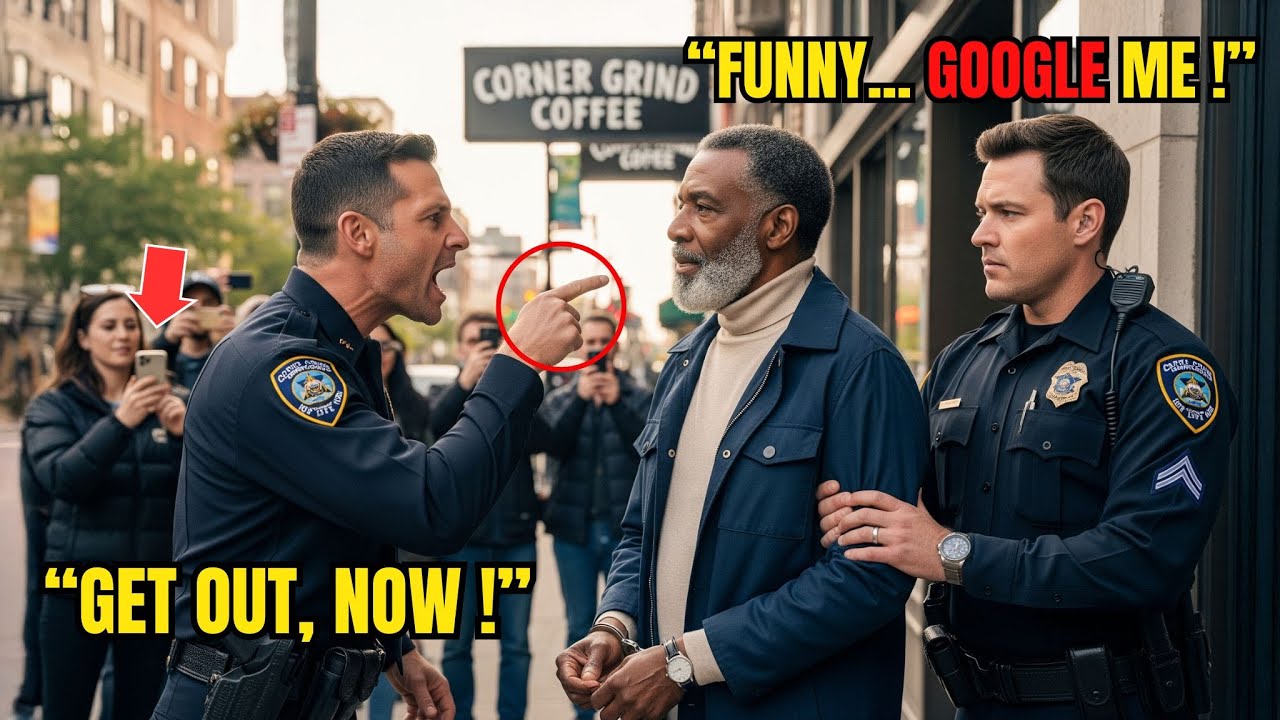
Turn around and put your hands against the wall now. Metal handcuffs snap shut around 72-year-old Benjamin Lewis outside Corner Grind Coffee on 1849 Market Street, Riverside. The former Chief Justice of Ohio Supreme Court stands helpless against the brick wall. What’s your problem, old man? Officer Derek Harrison just handcuffed his own judge, jury, and executioner.
In 8 minutes, a radio call will end both officers careers. Because when you Google Benjamin Lewis after arresting him for loitering, you discover you’ve just humiliated the most powerful legal mind in Ohio history. What happens next will blow your mind. Two cops go from heroes to zeros with a single search. Justice served cold with karma that’ll restore your faith in poetic justice.
Drop a comment if you’ve seen police overreach. This hits different. Hit that bell because you’re about to witness the most satisfying power flip in internet history. Sometimes the person you choose to bully can destroy your entire world. Benjamin Lewis had always been an early riser.
At 72, the former Chief Justice of Ohio maintains the same routine he’s followed for decades. Up at 6, coffee black, morning walk through downtown Riverside before the traffic builds and the sidewalks fill with rushing commuters. 5 years into retirement, Benjamin moves through his adopted hometown with the quiet dignity that defined his 30-year judicial career.
Riverside isn’t Columbus. Here, nobody recognizes the man who once decided cases that shaped Ohio law. The anonymity suits him perfectly. This Tuesday morning feels no different than any other. The October Air carries hints of coming winter. Maple leaves crunch underfoot as Benjamin makes his way down Market Street toward his usual destination, Corner Grind Coffee, where he’ll order his regular medium roast and read the morning paper.
The shop won’t open for another 15 minutes, but Benjamin doesn’t mind waiting. He’s learned to appreciate these quiet moments before the world wakes up. Standing outside the shop, hands clasped behind his back, he watches early commuters hurry past. A few nod politely. Most don’t notice him at all. He pulls out his phone to check the time. 8:43 a.m. The shop opens at 9:00.
Benjamin settles against the brick wall beside the entrance, content to wait and observe the morning rhythm of a city coming to life. A police cruiser turns onto Market Street, moving slowly through the nearly empty intersection. Nothing unusual. Riverside police patrol these streets regularly, especially during the morning and evening rushes when foot traffic peaks.
Benjamin doesn’t pay much attention to the cruiser as it approaches. Why would he? In all his years on the bench, he’s maintained profound respect for law enforcement. Police officers risk their lives to protect communities. They deserve support, not suspicion. The cruiser slows as it passes the coffee shop.
Through the passenger window, Benjamin catches a glimpse of two officers inside. The driver appears young, maybe early 30s. His partner looks even younger. The cruiser continues down the block, makes a U-turn, and heads back toward the coffee shop. This time it stops directly in front of the building. Both officers step out, adjusting their belts and scanning the street with practiced eyes.
Benjamin watches with mild curiosity as the officers approach. He assumes they’re stopping for coffee, though the shop remains closed. Perhaps they have business with the owner. He has no idea this moment will change everything. Officer Derek Harrison steps out of the patrol car and immediately notices the elderly black man standing against the coffee shop wall.
Harrison has been patrolling Riverside’s downtown district for 8 years. He knows the usual morning crowd. Business owners opening shops, early commuters grabbing coffee, joggers heading to the Riverside Park. This man doesn’t fit the pattern. Morning, Harrison calls out, his hand instinctively moving toward his radio. His partner, Officer Tommy Brown, positions himself slightly behind and to the left. Standard approach protocol.
Benjamin straightens and nods politely. Good morning, officers. Harrison studies the well-dressed elderly man. Clean appearance. No obvious signs of intoxication or distress, but something feels off. What’s this guy doing standing outside a closed business at 8:43 in the morning? Can I ask what you’re doing here? Harrison’s tone carries the authoritative edge he’s perfected over years of street policing.
Waiting for the coffee shop to open, Benjamin replies simply. I come here most mornings. Harrison exchanges a quick glance with Brown. The shop doesn’t open until 9:00. Why would someone stand outside for 15 minutes when they could wait in their car or at home? Do you have identification? Benjamin reaches slowly into his jacket pocket, his movements deliberate and non-threatening.
Years of observing courtroom behavior have taught him how easily situations can escalate. He produces his Ohio driver’s license and hands it to Harrison. Harrison examines the license. Benjamin Lewis, age 72. Address shows a residential street about six blocks away. Everything appears legitimate, but Harrison’s instincts tell him something isn’t right about this encounter.
A young woman walking her dog stops across the street, phone already in hand. She begins recording, drawn by the sight of two police officers questioning an elderly black man. Her finger hovers over the record button. Mr. Lewis Harrison continues, “We’ve had reports of suspicious activity in this area. Loitering, panhandling.
I need to ask you to move along.” Benjamin’s expression shifts slightly. Not anger, but something deeper. Recognition. He’s seen this before. The casual exercise of authority without just cause. The assumption of guilt based on appearance rather than action. Officer, I’m simply waiting for a business to open. That’s not illegal. Harrison’s jaw tightens.
He doesn’t like being challenged, especially by someone who should show more respect for police authority. Sir, I’m asking you to move along. Don’t make this difficult. The woman across the street presses record. Her phone captures everything. The elderly man’s calm demeanor, the officer’s aggressive posture, the tension building in what should be a routine encounter.
Benjamin remains perfectly still. Am I under arrest? You’re being detained for questioning, Harrison responds, his voice hardening. Turn around and place your hands against the wall. On what grounds? Harrison’s radio crackles. He ignores it. On grounds of failure to comply with a lawful order. Turn around now. Benjamin Lewis, former Chief Justice of Ohio, slowly turns and places his hands against the brick wall of corner grind coffee.
The metal cuffs click into place around his wrists with a sound that will echo through Riverside’s police department for months to come. The woman across the street keeps recording, her phone capturing every second of what’s about to become the most watched police encounter in Riverside’s history. The video uploads to social media before Benjamin Lewis reaches the police station.
Within 30 minutes, elderly black man arrested outside coffee shop begins its viral journey across platforms. The footage is clear, unambiguous. An elderly man in a clean sweater and slacks, hands cuffed behind his back, being led to a patrol car for the crime of waiting outside a business. Harrison and Brown don’t realize they’re already internet famous as they process Benjamin at Riverside Police Department.
Standard booking procedures, fingerprints, photograph, personal effects inventory. Benjamin cooperates fully, his demeanor remaining calm and dignified throughout the humiliating process. The desk sergeant, a 20-year veteran named Patricia Wilson, notices something unusual about this arrest. The suspect is articulate, well-dressed, and carries himself with an authority that seems inconsistent with a loitering charge.
But she’s seen enough arrests to know appearances can deceive. By 10:00 a.m., the video has been shared 3,000 times. Comments pour in from viewers outraged by what appears to be a clear case of racial profiling. Local news outlets pick up the story. The Riverside Tribune’s police reporter Sarah Johnson receives a tip about the arrest and immediately begins making calls.
Meanwhile, Benjamin sits in a holding cell, still wearing the clothes he’d chosen for his morning coffee run. He’s been through worse. 30 years on the bench exposed him to the criminal justice systems harsh realities, but experiencing it from this side provides a perspective he’d never fully appreciated.
The viral momentum accelerates through the lunch hour. Hash Riverside arrest begins trending locally. The original video reaches 50,000 views by noon. Local television stations start preparing segments for their evening broadcasts. Social media users demand answers from Riverside Police Department. Sarah Johnson arrives at the police station at 100 p.m.
Press credentials ready. She’s covered police misconduct cases before, but this video strikes her as particularly egregious. An elderly man peacefully waiting outside a business, arrested for no apparent reason. The desk sergeant stonewalls her initial questions. No comment on ongoing investigations. Standard department policy when media attention threatens to complicate police operations, but Sarah knows how to work sources.
She makes calls to contacts within the department. Someone will talk. someone always does when a case gains this much public attention. At 2 p.m., the video surpasses 100,000 views. Comments sections explode with anger and demands for accountability. Riverside’s police department finds itself in a public relations nightmare with no clear strategy for containing the damage.
Harrison and Brown remain unaware of the growing storm. They’ve filed their reports and moved on to other calls. Routine arrest, nothing special. They have no idea their careers now hang in the balance of viral video and public outrage. Benjamin’s bail hearing is scheduled for 400 p.m. Standard procedure for misdemeanor charges.
But by then, the story will have legs. Local becomes regional becomes national. The video that started with one concerned citizen’s phone will reach millions of viewers by evening. The Riverside Tribune’s website crashes from traffic as Sarah Johnson’s initial story goes live.
Elderly man arrested for loitering outside coffee shop sparks outrage. The article includes embedded video and raises pointed questions about police tactics and racial bias. Mayor Patricia Davis receives her first angry call at 2:30 p.m. Then another. Her office phone rings continuously as constituents demand explanations for what they’re seeing online.
An emergency meeting with police chief Martin Anderson is scheduled for 300 p.m. But nobody yet knows the most important detail about Benjamin Lewis. The information that will transform this local controversy into a statewide scandal. The fact that will make Harrison and Brown wish they’d never stopped their patrol car outside Corner Grind Coffee.
The dispatcher’s voice drops to a whisper. Sir, are you certain about the name Benjamin Lewis? Harrison stands at his patrol car, radio in hand, reviewing the morning’s arrest report. Affirmative. Benjamin Lewis, age 72, Riverside resident. Why? Silence on the radio. Then, Officer Harrison, please return to station immediately for briefing with Chief Anderson.
Something in the dispatcher’s tone makes Harrison’s stomach clench. Behind him, Brown looks up from his paperwork with questioning eyes. They’ve been partners for 3 years. Brown has never heard their dispatcher sound quite like this. What’s the issue? Harrison presses. Just return to station, sir. Priority one.
The drive back to headquarters takes 8 minutes. Neither officer speaks. Harrison’s mind races through the morning’s events, searching for mistakes. The arrest seemed clean. Failure to comply with lawful order, standard procedure. Chief Anderson waits in his office, door closed, blinds drawn. His usually composed demeanor shows cracks of strain.
Behind his desk, a computer screen displays the Ohio Supreme Court website. Benjamin Lewis’s official portrait stares back at them. “Sit down,” Anderson says quietly. Harrison and Brown take the chairs across from Anderson’s desk. The chief’s office suddenly feels smaller than usual, the air thicker. “The man you arrested this morning,” Anderson begins, his voice carefully controlled.
Benjamin Lewis, do either of you recognize that name? Harrison shakes his head. Brown does the same, just another morning arrest. Nothing special about the name or the man. Anderson turns his computer screen toward them. The official biography fills the display. The Honorable Benjamin Lewis served as Chief Justice of the Ohio Supreme Court from 1993 to 2019.
He authored landmark decisions on civil rights, criminal justice reform, and constitutional law. Prior to his appointment to the state’s highest court, Justice Lewis served 15 years as a federal district judge. The color drains from Harrison’s face. Brown’s hands begin to shake slightly. They’ve just handcuffed and arrested the former head of Ohio’s judicial system, the man who decided cases that shaped state law for a generation.
Jesus Christ,” Brown whispers. Anderson’s jaw tightens. It gets worse. The video is viral. 150,000 views and climbing. The mayor’s getting calls from Columbus. The governor’s office wants a briefing. Harrison stares at the computer screen. Benjamin Lewis’s dignified portrait seeming to judge him from across the desk.
The morning’s encounter replays in his memory, but with new context. the elderly man’s calm authority, his measured responses, the way he carried himself despite being handcuffed and humiliated. “We didn’t know,” Harrison says weakly. “That’s not the point,” Anderson snaps. “You arrested a 72-year-old man for standing outside a coffee shop.
His identity makes it worse, but it was wrong regardless.” The phone on Anderson’s desk rings. He glances at the caller ID and grimaces. That’s the mayor again. Third time in 20 minutes. Brown finds his voice. What happens now? Anderson leans back in his chair, suddenly looking every one of his 58 years. Now we deal with the fallout, media calls, internal investigation, possible federal civil rights inquiry, and two officers whose careers just became very, very complicated.
Harrison’s radio crackles with routine calls from other units. Normal police work continuing while his world collapses. Chief, the arrest was by the book. He was loitering. He failed to comply. Was he loitering or was he waiting for a business to open? Anderson asks pointedly. Because there’s a difference, and that difference just became the most expensive legal lesson in this department’s history.
The weight of realization settles over the room. Benjamin Lewis isn’t just any retired judge. He’s the former chief justice, the man who shaped Ohio law for 26 years, the legal scholar whose opinions are still cited in courtrooms across the state, and they handcuffed him for standing outside a coffee shop. Sarah Johnson lives for stories others want buried.
The investigative reporter has spent 12 years uncovering corruption in smalltown Ohio. City council kickbacks, school board embezzlement, police misconduct. The Benjamin Lewis arrest fits a pattern she’s been tracking for months. Back at the Riverside Tribune newsroom, Sarah pulls Harrison’s personnel file from public records. What she finds sends her reaching for her notebook.
12 formal complaints filed against Officer Derek Harrison over 8 years. Use of excessive force, racial profiling, unlawful detention. All 12 complaints dismissed by internal review. The first complaint dates to 2016, Harrison’s rookie year. Traffic stop escalated to arrest when the driver, a young black man, questioned the reason for being pulled over.
Charges later dropped. Department review found no evidence of misconduct. Sarah cross references complaint dates with case dispositions. A disturbing pattern emerges, charges frequently reduced or dismissed after arrest. Defense attorneys noting procedural irregularities in police reports, but no consequences for Harrison.
She picks up her phone and dials Marcus Williams, a defense attorney who’s tangled with Harrison multiple times. Marcus, it’s Sarah. I need to talk about Derek Harrison. Which case? Williams responds immediately. I’ve got three active files involving that guy. The Benjamin Lewis arrest, but I’m looking bigger picture. Pattern of behavior.
Williams office sits two blocks from the courthouse, cramped with case files and legal texts. He agrees to meet Sarah at 3 p.m. with the understanding that their conversation remains off the record until she grants permission. At Williams office, Sarah reviews case files spanning Harrison’s entire career. The documentation paints a picture of an officer who consistently pushes boundaries, particularly during encounters with minority suspects.
Here’s the thing about Harrison, Williams explains, pulling another file from a stack. He’s smart enough to avoid obvious violations. Nothing that screams federal civil rights case, just consistent patterns of excessive authority. Sarah takes notes as Williams walks through specific cases. Traffic stops that become searches without probable cause.
Loitering arrests in situations where warnings would suffice. Always technically legal, but consistently aggressive. The department protects him because his arrest numbers look good. Williams continues. Supervisors see productivity. They miss the pattern. But Sarah spots something Williams missed. She asks for Harrison’s partner assignments over the years.
Tommy Brown has been paired with Harrison for 3 years. Before Brown, Harrison worked with five different partners over 5 years. That’s unusual, Williams admits. Good partnerships tend to last longer than that. Sarah makes a mental note to investigate partner turnover. Officers don’t typically request reassignment unless something’s wrong.
Her phone buzzes with a text from an unknown number. Body cam footage from this morning is missing. Thought you should know. A friend. Sarah stares at the message. Body cameras are mandatory for all Riverside officers during arrests. Missing footage suggests either equipment failure or deliberate concealment.
Neither explanation looks good for the department. She calls the police department’s public information officer requesting body cam footage from the Lewis arrest. Standard procedure for media inquiries. The response comes within an hour. Technical difficulties prevented proper recording of incident. Alternative documentation available through arrest report.
Technical difficulties. Sarah’s covered enough police misconduct to recognize department speak for we’re not releasing this video. The missing body cam footage becomes Sarah’s smoking gun. She files a formal records request, knowing the department will stall for weeks, but the stalling itself becomes part of the story. At 5:00 p.m.
, Sarah receives another anonymous text. Check Harrison’s overtime records. Pattern there, too. Overtime abuse is common in small departments. Officers pad hours through unnecessary arrests and extended booking procedures. Sarah files another records request, this time for Harrison’s overtime claims over the past 3 years. By 6 p.m.
, her initial investigation yields enough material for a follow-up story. Harrison’s complaint history, missing body cam footage, suspicious overtime patterns. The Benjamin Lewis arrest isn’t an isolated incident. It’s the latest example of systemic problems within Riverside Police Department. Sarah’s editor, veteran journalist Robert Taylor, reviews her notes with growing excitement.
Local police misconduct stories rarely gain traction, but this case involves a former chief justice and viral video. National media attention seems inevitable. “How soon can you have the follow-up ready?” Taylor asks. “Tomorrow morning,” Sarah responds. “But I want to talk to more sources first. Former partners, other complaintants, build the full picture.
” Taylor nods approval. The Lewis arrest opened a door into deeper problems. Sarah intends to walk through it fully armed with documentation and witness testimony. As she prepares to leave the office, Sarah’s phone rings again. This time, the caller identifies herself. My name is Janet Morrison. My son was arrested by Officer Harrison 2 years ago. I saw the video today.
I think you need to hear our story. The phone call comes at midnight. Sarah Johnson’s landline rarely rings after 1000 p.m. Friends and sources use her cell phone. The ancient rotary phone in her apartment typically stays silent through the night. Sarah Johnson. The voice is unfamiliar. Male, deliberately muffled. Who is this? Someone who thinks you should be careful about the stories you’re telling. The line goes dead.
Sarah stares at the receiver, adrenaline flooding her system. 20 years of investigative journalism have taught her to recognize threats. This definitely qualifies. Her cell phone buzzes with a text message. Drop the Harrison story. Some rocks shouldn’t be turned over. Sarah screenshots the message and immediately calls her editor.
Taylor’s seen enough intimidation campaigns to know the drill. File a report with police, document everything, and keep digging. By morning, the pressure campaign intensifies. Sarah arrives at the Tribune office to find her editor fielding angry calls from Riverside’s Police Union Representative, William Taylor. The union is threatening to pull all cooperation with our newsroom, Taylor explains grimly.
No more tips on drug busts, no access to crime scenes, complete freeze out. Police departments depend on symbiotic relationships with local media. Reporters need access to breaking news. Police need positive coverage to maintain public support. When that relationship sour, both sides suffer. But Sarah knows they’re on to something big.
The harassment confirms her suspicions about Harrison and the department’s willingness to protect problematic officers. Meanwhile, Benjamin Lewis discovers his own pressure campaign. At 8:00 a.m., his home phone rings with the first call. Judge Lewis, this is Lieutenant William Taylor, Riverside Police Union. I’d like to discuss the unfortunate incident yesterday morning.
Benjamin’s tone remains measured. What aspect of the incident interests you, Lieutenant? We believe there may have been miscommunication that led to the unfortunate encounter. The officers involved are good men, family men. One mistake shouldn’t destroy their careers. Benjamin recognizes the approach. Soft pressure appeal to fairness suggests that pursuing justice would constitute vindictive overreach.
I appreciate your concern for your officers, Benjamin responds carefully. But I’m not sure what you’re asking of me. Perhaps we could meet privately, discuss options that serve everyone’s interests. The implication hangs in the air, drop the matter quietly, accept an apology, move on without pursuing formal complaints or legal action.
Benjamin’s response surprises Taylor. Lieutenant, I spent 30 years on the bench. I understand how justice works. It doesn’t involve private meetings or negotiated outcomes. The police union representatives tone shifts slightly. Sir, with all due respect, pursuing this matter publicly serves no one. The officers made an error in judgment.
They’re willing to acknowledge that error. Are they willing to acknowledge it publicly in writing with commitment to retraining and accountability measures? Silence on the line? Then we’ll be in touch. Officer Harrison, through union representation, declined to comment for this story, citing ongoing internal review procedures.
The pressure extends beyond phone calls. Benjamin’s neighbors report seeing patrol cars driving slowly past his house multiple times daily. Not technically harassment, but a clear message about police presence in his neighborhood. Sarah Johnson experiences similar attention. Riverside police officers suddenly seem very interested in traffic enforcement near her apartment building.
Parking tickets appear on her car with increasing frequency. Each citation technically valid, but the timing suggests deliberate harassment. At the Tribune office, anonymous packages begin arriving. Photos of Sarah leaving her apartment. Records of her daily routine. Again, nothing explicitly threatening, but the message is clear.
We’re watching. The campaign affects other sources, too. Janet Morrison, the mother whose son was arrested by Harrison 2 years ago, calls Sarah with second thoughts. Maybe I spoke too quickly, Morrison explains nervously. My son’s got his life back together. I don’t want to stir up trouble. Sarah recognizes the signs.
Someone got to Morrison, reminded her that her son still lives in Riverside, still drives local streets patrolled by Harrison and his colleagues. But the intimidation campaign backfires in one crucial way. It confirms Sarah’s investigation is targeting the right people. Innocent officers don’t need organized pressure campaigns to protect them.
The police department issued a statement emphasizing their commitment to fair and unbiased law enforcement while respecting the ongoing nature of internal review procedures. Sarah doubles down on her investigation, knowing that backing down now would signal vulnerability to future intimidation. She files additional records requests and reaches out to state agencies with oversight authority over local police departments.
The message is clear. Some stories are too important to abandon regardless of pressure. The chest pains start during Benjamin’s third interview that week. Sarah Johnson sits across from him in his living room, notebook filled with details about the arrest and its aftermath. Benjamin has been methodical in recounting events, but the stress shows in subtle ways.
Slower speech, longer pauses, hands that occasionally tremble when he reaches for his coffee cup. Mr. Lewis, are you all right? Sarah notices him press his hand against his chest. Benjamin waves off her concern. Just tired. This week has been challenging. But the pain persists, sharp radiating down his left arm. Benjamin Lewis, former Chief Justice of Ohio, recognizes the symptoms even as he tries to dismiss them.
At 72, with a family history of heart disease, stress has become his enemy. The arrest was humiliating. The media attention, while necessary, feels overwhelming. The pressure campaign from police representatives adds another layer of strain. Benjamin’s physician, Dr. Elizabeth Davis, sees him that afternoon.
Blood pressure elevated, heart rhythm irregular. Classic signs of stress-induced cardiac episodes. You need to slow down, Dr. Davis warns. Your body is responding to psychological pressure. This situation with the police department, maybe it’s time to let others handle it. Benjamin sits on the examination table, dignity intact, despite the hospital gown.
Doctor, I spent 30 years making difficult decisions. I won’t be intimidated into silence now. But privately, he questions whether the fight is worth his health. The viral video accomplished its purpose. Public attention has been drawn to police misconduct. Maybe that’s enough. Sarah Johnson faces her own crisis of confidence.
The intimidation campaign has escalated beyond phone calls and surveillance. Someone broke into her apartment while she was at work. Nothing stolen, but files related to the Harrison investigation scattered across her floor. The message was unmistakable. We can reach you anywhere. Her editor, Robert Taylor, calls an emergency meeting.
Sarah, I’m concerned about your safety. Maybe we should back off. Let other outlets take the lead. If we back down now, we’re telling every corrupt cop in Ohio that intimidation works, Sarah responds. But her voice lacks its usual conviction. The truth is, she’s scared. Investigative journalism requires courage, but it shouldn’t require risking personal safety for local police misconduct stories.
That evening, Benjamin Lewis sits in his study, surrounded by legal texts and case files. He’s drafted a letter to the Riverside Police Chief outlining his concerns about officer training and accountability measures. The letter is professional, measured, constructive. But as he reviews the draft, doubt creeps in. Is pursuing justice worth the stress it’s causing, the health risks, the disruption to his peaceful retirement? His wife of 45 years, Margaret, finds him staring at the letter at midnight.
Benjamin, you look exhausted. I’m questioning whether this fight serves any purpose beyond my own ego, he admits. Maybe I should just let it go. Margaret sits beside him, studying the man who once shaped Ohio law with his decisions. You’ve never backed down from doing what’s right. Don’t start now. But the cost, the cost of justice is always high, Margaret reminds him.
That’s why so few people are willing to pay it. Across town, Sarah Johnson stares at her computer screen, cursor blinking in an empty document. The follow-up story sits half-written, sources documented, timeline established. But publishing it will escalate the conflict beyond local police misconduct into something potentially dangerous.
Her phone displays 17 missed calls from sources, other reporters, and police union representatives. Each call represents pressure to either drop the story or pursue it more aggressively. At 2:00 a.m., both Benjamin Lewis and Sarah Johnson face the same question. Is justice worth the personal cost of pursuing it? Benjamin folds his letter and places it in an envelope.
Address written in his careful handwriting. Chief Martin Anderson, Riverside Police Department. Sarah Johnson saves her draft story and closes her laptop. Tomorrow, she’ll have to decide whether to publish it. For both of them, mourning will bring the moment of truth about how much they’re willing to sacrifice for accountability.
The letter arrives on official letterhead. Judge Charles Wilson’s message to Benjamin Lewis carries the seal of the Ohio Court of Appeals. But the words are personal, written by a colleague who served alongside Benjamin for 15 years. Dear Ben, the legal community is watching. What happened to you cannot stand unanswered.
You have our full support. Wilson’s letter is the first of dozens federal judges, state appellet justices, law school deans, prominent attorneys from across Ohio. Each message carries the same theme. The arrest of Benjamin Lewis represents an attack on judicial independence and legal authority. By Thursday morning, Benjamin’s dining room table overflows with correspondence, support from colleagues he hasn’t spoken to in years, offers of legal assistance from prestigious law firms, endorsements from civil rights organizations. The Ohio
State Bar Association issues an unprecedented statement. The arrest of former Chief Justice Benjamin Lewis raises serious concerns about police accountability and respect for legal institutions. We call for thorough investigation and appropriate consequences. Sarah Johnson receives her own wave of support.
The Ohio Society of Professional Journalists offers legal assistance if her investigation faces further interference. National Press Freedom Organizations begin monitoring the story for signs of reporter intimidation. At the Tribune Newsroom, editor Robert Taylor Fields calls from larger news outlets requesting permission to syndicate Sarah’s reporting.
The New York Times wants to interview her about press freedom in smalltown Ohio. CNN requests video statements about police intimidation tactics. This story has legs beyond Riverside. Taylor tells Sarah. National attention brings protection. Harder to intimidate a reporter when the whole country is watching. Benjamin Lewis makes his first public statement Thursday afternoon, reading from prepared remarks on the courthouse steps where he once presided over oral arguments.
I was arrested for standing outside a coffee shop. No law was broken. No public safety threat existed. The arrest was based on assumption rather than observation. Prejudice rather than probable cause. Media crews from Columbus and Cleveland record his statement. The video spreads across social media platforms, racking up hundreds of thousands of views within hours.
I’m speaking out not for personal vindication, but because silence enables systemic problems that affect every citizen who interacts with law enforcement. The crowd gathered for Benjamin’s statement includes familiar faces, fellow retired judges, former law clerks, attorneys who argued cases before his court. Their presence sends a clear message.
The legal establishment stands with Benjamin Lewis. Doctor Margaret Lewis, Benjamin’s wife and retired education professor, issues her own statement to local media. My husband dedicated his career to justice. He won’t be silenced by intimidation or discouraged by health challenges. The public support energizes Benjamin. The chest pains subside.
His physician notes improved blood pressure and heart rhythm during his follow-up appointment. Sarah Johnson benefits from similar momentum. Tips pour in from new sources willing to speak about Harrison’s conduct, former police department employees, defense attorneys with additional case files, citizens who witnessed questionable arrests but never reported them.
The intimidation campaign that seemed so threatening earlier in the week now appears counterproductive. Every anonymous phone call, every surveillance incident, every break-in gets reported to state authorities and adds credibility to accusations of police corruption. Thursday evening brings an unexpected development.
Officer Tommy Brown, Harrison’s partner for three years, requests a meeting with internal affairs investigators. Word leaks quickly through police department channels. Brown wants to make a statement about the Lewis arrest. Brown’s decision creates panic within the police union. If Harrison’s own partner contradicts the official narrative, the department’s position becomes untenable.
Union Representative William Taylor makes emergency calls to Brown’s home, offering legal representation and urging him to reconsider. But Brown’s mind is set. He’s watched Harrison’s questionable tactics for 3 years. The viral video and national attention make continued silence impossible. Friday morning brings news that changes the entire dynamic.
The Ohio Attorney General’s Office announces a formal investigation into Riverside Police Department practices with specific focus on the Benjamin Lewis arrest and related misconduct allegations. State level investigation means federal oversight and outside scrutiny that local authorities can’t control or intimidate. The case has grown beyond Riverside’s ability to contain it through pressure campaigns and internal reviews.
Benjamin Lewis receives the news while reading morning papers in his study. For the first time in a week, he smiles genuinely. Justice moves slowly, but it does move. Sarah Johnson gets confirmation that her follow-up story will run in Sunday’s Tribune with syndication to three major Ohio newspapers.
National outlets are preparing their own coverage based on her investigation. The tide has turned. What began as an isolated incident of police misconduct has become a statewide examination of accountability, transparency, and justice. The radio transcript changes everything. For more detailed information on what content helped formulate this response, please let me know and I’ll help clarify the key points. Relevant chats two results.
Select untitled untitled. Select untitled untitled. The user prompt is empty so I cannot determine the primary language. However, based on the thinking block being in Vietnamese, I’ll provide the summary in Vietnamese. Orchestrated smoking gun evidence linking official misconduct. Tuketim Kim toy thai kong tinv radio transcript via smoking gun receipts.
Trong cacanu toy can tie took vietenv twist quietvoy radio transcript. Nu receipt R8 Chung men Harrison deanteen Benjamin Lewis nong van taupept arrest de la smoking gun evidence. Sarah Johnson stares at the document that will end Derek Harrison’s career. The radio transmission log obtained through state level subpoena shows every communication between Riverside patrol units and dispatch during Benjamin Lewis’s arrest.
Three pages of routine police chatter, officer locations, and status updates. But buried in the timestamp data, one entry changes the entire narrative. At 8:51 a.m., 4 minutes after handcuffs clicked around Benjamin’s wrists, Harrison’s radio crackles with a transmission to dispatch. Dispatch, can you run a background check on Benjamin Lewis, age 72, Ohio, license? Standard procedure.
Nothing unusual about checking arrest subjects for warrants or prior convictions. The dispatcher’s response logged at 8:52 a.m. changes everything. Officer Harrison, that name shows multiple hits. Benjamin Lewis, do ob matching your subject. Retired Chief Justice, Ohio Supreme Court. Distinguished service record, no wants or warrants.
Silence on the radio for 37 seconds. The transcript notes no transmission. Unit 248. Then Harrison’s voice returns. Dispatch, confirm identity. Affirmative. Unit 248. Benjamin Lewis, former Chief Justice, retired 2019 after 26 years on State Supreme Court. Clean record. Another pause. 23 seconds this time. Harrison’s final transmission seals his fate.
Copy that, dispatch. Continuing with arrest procedure. Sarah reads the transcript three times before the implications fully register. Harrison knew exactly who Benjamin Lewis was. The radio log proves he received confirmation of Benjamin’s identity while Benjamin remained handcuffed against the coffee shop wall, and he continued the arrest.
Anyway, the timeline becomes clear through radio logs. Benjamin was handcuffed at 8:50 a.m. Harrison learned his true identity at 8:52 a.m. Benjamin wasn’t released until 9:15 a.m. 23 minutes after Harrison confirmed he’d arrested the former Chief Justice of Ohio. 23 minutes of deliberate humiliation. Sarah immediately calls her editor.
Robert, I need you to see this. The radio transcript. Harrison knew who Benjamin was and kept him cuffed. Anyway, the smoking gun evidence transforms the case from mistaken identity to deliberate misconduct. Harrison can no longer claim ignorance or honest error. The radio log proves intent.
Within hours, Sarah’s story breaks online. Radio logs prove officer knew he arrested former chief justice continued. Anyway, the revelation sends shock waves through Ohio’s legal community. Bar associations that offered tepid support now demand Harrison’s immediate termination. Judge Charles Wilson issues a blistering statement calling the arrest a deliberate affront to judicial authority and rule of law.
Harrison’s defense collapses overnight. Union Representative William Taylor faces reporters with no viable strategy. How do you defend an officer who knowingly humiliated a former chief justice for nearly half an hour? Officer Harrison followed department protocol. Taylor offers weekly. The arrest was already in progress when additional information became available, but the transcript reveals another damning detail.
Harrison requested the background check. Standard arrest procedure doesn’t require investigating victims of loitering citations. Harrison specifically sought Benjamin’s identity, suggesting he suspected something significant about the elderly man he’d handcuffed. Benjamin Lewis receives news of the transcript while reviewing legal briefs in his study.
Margaret finds him staring at the radio log print out, shaking his head slowly. He knew, Benjamin says quietly. For 23 minutes, he knew exactly who I was, and he chose to leave me handcuffed against that wall. The personal betrayal cuts deeper than the initial arrest. Mistaken identity might be forgivable. Deliberate humiliation is not.
Police Chief Martin Anderson calls an emergency press conference for 6 p.m. He has no choice but to address the radio transcript revelation. His department’s credibility hangs in the balance. Harrison’s partner, Tommy Brown, issues his own statement through an attorney. Officer Brown was not privy to radio communications between Officer Harrison and dispatch.
He relied on his partner’s judgment regarding arrest procedures. Brown’s careful language suggests distance from Harrison’s decision-making. partners typically share information during arrests. Brown’s ignorance of the radio transmission seems deliberately cultivated. The radio transcript becomes exhibit A in what legal observers predict will be a federal civil rights lawsuit.
Benjamin’s case has evolved from municipal misconduct to potential criminal charges against Harrison. As evening news broadcasts lead with the radio transcript story, Harrison realizes his career in law enforcement is finished. The evidence is incontrovertible. His actions were deliberate and indefensible. The smoking gun has been fired.
The Riverside City Council Chamber has never seen anything like this. Overflow crowds pack the gallery, spilling into hallways as residents demand accountability for Benjamin Lewis’s arrest. Local media crews compete for space with national outlets drawn by the radio transcript revelation. The room thrums with tension as Mayor Patricia Davis gavvels the emergency session to order.
Benjamin Lewis sits in the front row, dignity intact, despite the week’s ordeal. Beside him, attorney Margaret Williams, no relation, reviews prepared remarks. Behind them, three dozen supporters fill designated seats. Retired judges, civil rights advocates, concerned citizens who understand the broader implications of police misconduct.
Police Chief Martin Anderson occupies the witness table. sweat visible despite the October evening chill. Union Representative William Taylor sits nearby, legal documents stacked before him like defensive fortifications. Officer Derek Harrison is notably absent. His attorney advised against public testimony pending potential federal charges.
The empty chair intended for Harrison becomes its own indictment. Mayor Davis reads a prepared statement acknowledging serious concerns about the arrest while emphasizing the city’s commitment to thorough investigation. Her words sound rehearsed, focus grouped to avoid admission of liability. Benjamin Lewis approaches the podium at 7 p.m. sharp.
The chamber falls silent as Ohio’s former chief justice adjusts the microphone and surveys the packed room. I’ve spent 30 years in courtrooms, Benjamin begins, his voice carrying the authority that once commanded Ohio’s highest court. I understand due process. I respect law enforcement. I believe in accountability. He pauses, letting silence emphasize his next words.
What happened to me outside corner grind coffee was not an error in judgment. The radio transcript proves it was deliberate misconduct. Murmurs ripple through the gallery. Benjamin continues with measured precision. Officer Harrison learned my identity while I remained handcuffed. He chose to continue my humiliation for 23 additional minutes.
That choice reveals character, not confusion. Behind him, supporters nod approval. Benjamin’s courtroom experience shows in his presentation. Factual, logical, devastating. This case isn’t about Benjamin Lewis. It’s about every citizen who trusts police to exercise authority fairly. about every elderly person who walks downtown streets expecting protection, not persecution.
Chief Anderson shifts uncomfortably as Benjamin’s words hit home. The political calculus has changed. Defending Harrison now means defending deliberate misconduct caught on official police radio. When Benjamin concludes, sustained applause echoes through the chamber. Mayor Davis calls for order, but makes no effort to stop the ovation.
Sarah Johnson takes the podium next, armed with documentation from her investigation. She methodically reviews Harrison’s complaint history, missing body camera footage, and the pattern of intimidation that followed her reporting. 12 complaints dismissed by internal review. $38,000 in overtime claims, radio transcript proving deliberate misconduct.
This isn’t one bad moment. It’s systemic failure. Taylor, the union representative, responds with desperate deflection. Officer Harrison served this community for 8 years. He deserves consideration for his service record, and commitment to public safety, but the transcript has destroyed Harrison’s credibility. Council members ask pointed questions about department oversight, complaint procedures, and accountability measures.
At 8:30 p.m., an unexpected speaker approaches the podium. Officer Tommy Brown, still in uniform, walks slowly to the microphone. His presence surprises everyone. Fellow officers don’t typically testify against partners. I need to set the record straight. Brown begins nervously about what happened that morning.
The chamber holds its breath. Brown’s testimony could validate or destroy the case against Harrison. Derek, Officer Harrison, he’s been my partner for 3 years. I’ve seen him make questionable calls before. aggressive arrests, racial profiling. I should have spoken up sooner. Chief Anderson’s face drains of color.
Brown is confirming every allegation about Harrison’s pattern of misconduct. That morning, when Derek called for the background check, he told me he suspected something about the suspect. When dispatch confirmed the chief justice identity, Derek laughed. He said, “Let him sweat a little longer.” Gasps echo through the chamber.
Brown’s testimony proves Harrison’s malicious intent beyond any reasonable doubt. I’ve kept quiet too long. What happened to Justice Lewis was wrong. Officer Harrison needs to be held accountable. Brown’s courage breaks the blue wall of silence that protects problematic officers. His testimony makes Harrison’s termination inevitable and opens the door for federal prosecution.
Council member Janet Morrison asks the question everyone wants answered. Chief Anderson, what immediate action will the department take regarding Officer Harrison? Anderson recognizes political reality. His department faces federal investigation, potential lawsuit liability, and complete loss of public trust if he continues protecting Harrison.
Officer Harrison has been suspended without pay pending termination proceedings, Anderson announces reluctantly. Additionally, we’re implementing immediate reforms to complaint review procedures and accountability measures. The crowd erupts in approval. Justice delayed but finally delivered. As the meeting concludes, Benjamin Lewis shakes Tommy Brown’s hand outside the chamber.
Thank you for your courage, Officer Brown. That couldn’t have been easy. Brown nods grimly. Justice Lewis, some things matter more than career protection. What Derek did was wrong. Period. The hearing ends with Harrison’s career destroyed, the department’s credibility damaged, and Benjamin Lewis vindicated, but the larger work of police reform is just beginning.
6 months later, Benjamin Lewis walks past corner grind coffee again. The morning routine has resumed. Early rise, black coffee, downtown stroll before traffic builds. But everything has changed, even as everything stays the same. Officer Derek Harrison pleaded guilty to federal civil rights violations in February.
18 months in federal prison, lifetime ban from law enforcement. The radio transcript that destroyed his defense now serves as evidence in DOJ training seminars nationwide. Tommy Brown received commendation for courage and testimony. He’s transferred to community policing, building bridges between residents and law enforcement.
His example inspired three other officers to report misconduct they’d previously ignored. The Riverside Police Department operates under federal consent decree. Body cameras mandatory. Complaint procedures independent. Racial bias training required. Chief Anderson retired early, replaced by an outside candidate with community policing experience.
Sarah Johnson won state journalism awards for her investigation. The Tribune circulation doubled as national outlets syndicated her reporting. Death threats stopped after Harrison’s conviction, but she keeps documentation of the intimidation campaign as a reminder of truth’s cost. Benjamin’s civil lawsuit settled for undisclosed terms.
Money wasn’t the goal. Systemic change was. The settlement funded police reform initiatives and community oversight programs. This Tuesday morning, Benjamin approaches Corner Grind Coffee at the same time as 6 months ago. But now, officers nod respectfully when they see him. Store employees wave from behind the counter.
Regular customers stop to chat about weather, local news, everyday life. The coffee tastes the same. The morning air carries familiar autumn hints. But the fear is gone. Both Benjamin’s fear of arbitrary police authority and the community’s fear of speaking truth to power. Some mistakes you can’t undo with an apology, but accountability can transform those mistakes into progress.
Benjamin Lewis learned that truth serves justice better than silence. A community learned that courage is contagious when someone stands up first. Police officers learned that protecting bad actors destroys trust with good people. The handcuffs that clicked around Benjamin’s wrists 6 months ago changed everything. Not through their placement, but through their consequences.
Justice delayed became justice delivered, proving that authority without accountability is just organized oppression. Today, Benjamin orders his regular medium roast and settles into his favorite corner table. The newspaper headlines focus on other stories, other struggles, other communities fighting for accountability. His story has ended, but the principles it represents continue.
If this story moved you, consider what happens in your community when authority goes unchecked. Share it with someone who believes in justice, regardless of cost. Hit subscribe to stay informed about stories that matter. What’s your experience with police accountability? The comment section belongs to you. Share your thoughts, your stories, your ideas for building better communities where everyone receives equal treatment under law.
Because some mistakes can’t be undone with apologies. But they can be prevented with vigilance, courage, and commitment to the simple truth that nobody nobody stands above the law. Some mistakes you can’t undo. But you can make sure they never happen